NID Mock Test : Sanyukta Singh Studio
"Just solve mock tests" — every senior, every YouTube video, every coaching brochure tells you this. And honestly, it's not wrong advice. It's just incomplete. Sitting for a NID Mock Test isn't about ticking a box on your prep checklist. Done right, it's the thing that actually teaches your brain to sketch, reason and solve problems the way NID wants you to, inside a clock that doesn't care how you're feeling that day.
We've been coaching design aspirants at Sanyukta Singh Studio for over nine years now — NIFT, NID, UCEED, CEED, all of it. And if there's one thing we keep seeing, semester after semester, it's this: the students who treat mock tests as a habit rather than a one-time formality walk into the exam hall calmer. Not because they're smarter. Because their nervous system has already been there before.
Why NID Mock Test Matters More Than Most Students Realise.
NID's entrance exam, the DAT, isn't your usual pen-and-paper test. Drawing, spatial reasoning, general knowledge, creative problem-solving, design aptitude — it's all thrown at you in one sitting with a strict clock running. You could know your syllabus cold and still fumble if the pressure of a timed paper is unfamiliar to you.
That's really the whole case for regular mock testing:
- It shows you your actual speed, not the speed you assume you have. Most students are shocked the first time.
- It flags weak spots — maybe it's visualization, maybe it's your GK section — long before the real exam does.
- It builds temperament. Staying steady when a question throws you off is a skill you only pick up by practicing under pressure, again and again.
- It mirrors how the paper is actually structured, so you're not just doodling for practice — you're rehearsing the real thing.
What Our NID Mock Test Series Actually Looks Like.
A lot of places sell "test series" that's really just a pile of recycled old papers. We didn't want to build that. Our faculty come from NID, NIFT and IIT backgrounds themselves, and part of their job is tracking how the exam pattern keeps shifting each year — because it does shift, more than most students expect.
So here's roughly how it's structured on our end:
- Full-length simulated papers that match the real exam's time limits and section weightage, not a watered-down version of it.
- Section-wise tests, so if visualization or verbal ability is your weak link, you can drill just that instead of sitting through a whole paper each time.
- Actual feedback after every attempt — not just a score, but where you lost time and why.
- A growing bank of NID mock test papers, both from previous years and freshly written ones, so you're seeing both proven patterns and newer question styles.
There are downloadable practice sets too, for students who want extra reps outside our scheduled sessions — some students just prefer working through NID mock test papers on their own time, and that's fine.
So, How Often Should You Actually Take One?
This comes up in almost every counselling call we do. Our honest answer, based on what's worked for thousands of students over the years:
- 6+ months out: one full test every couple of weeks, mostly to stay familiar with the format and track slow, steady improvement.
- 2–4 months out: step it up to a full-length NID Mock Test every week, alongside topic-wise practice.
- Final month: 2–3 tests a week if you can manage it, with the focus shifting almost entirely to speed and accuracy.
One thing worth saying plainly which is testing without reviewing is nearly pointless. Taking ten mock tests and never looking back at what went wrong teaches you almost nothing. The learning happens in the fifteen minutes after the test, not during it.
Mistakes We See Students Make, Over and Over.
- Skipping the review entirely. Test, close the paper, move on and repeat the same mistakes next time.
- Only practicing sections they're already good at, because it feels better than confronting a weak spot.
- Knowing the answer but running out of time anyway. If this is you, the problem isn't knowledge, it's pacing, and only timed practice fixes that.
- Testing in comfortable, distraction-filled conditions like phone nearby, music playing — which has nothing to do with the silence of an actual exam hall.
Who's This Really For?
Honestly, most serious NID aspirants fit here somewhere:
- Anyone prepping for NID's B.Des or M.Des entrance and wants a realistic sense of where they stand
- Students who've finished their syllabus and now just need to test themselves under pressure
- Aspirants hunting for genuinely reliable practice material that reflects the current pattern, not something outdated
- Anyone who'd rather get honest, faculty-reviewed feedback than just a number at the end
Whether you're studying solo or going through structured coaching somewhere, regular timed practice under exam-like conditions is one of the few things that reliably moves the needle this close to the exam.
Conclusion.
Cracking NID isn't purely about talent, whatever Instagram reels tell you. It's about preparation that actually resembles the real thing. A properly designed NID Mock Test doesn't just tell you where you stand — it slowly builds the readiness itself, attempt by attempt. At Sanyukta Singh Studio, the people designing our test series have sat with NID's exam pattern for years, so every paper you attempt is meant to move you a little closer, not just fill up your prep calendar.
If NID is the goal, don't leave testing for the last month. Start now, be honest with yourself about the review, and let each attempt sharpen the next one a bit more.
FAQ
It's a simulated version of NID's entrance exam — same structure, same timing, similar difficulty. It matters because it's really the only way to know, before exam day, whether your speed and temperament can handle the real thing.
Sanyukta Singh Studio puts out curated papers based on past exam patterns plus newer ones written to match NID's current format — you'll find these in our test series and study material section.
Depends how far out you are. Early on, one every couple of weeks is enough. As the exam gets closer, 2–3 full-length tests a week, paired with focused practice on whatever's still weak.
They do — but only if you review afterward. The score itself barely matters; it's the pattern of mistakes across multiple attempts that actually tells you what to fix.
Yes. We've got full-length papers for students further along, and section-wise tests for anyone still building fundamentals, so there's a reasonable entry point either way.
WHAT MAKES SANYUKTA STUDIO #1 IN NIFT/NID ENTRANCE
Highest Selection Ration of 92% in 2025-26 NIFT NID Entrance Exam. 100+ Selection in UCEED, 300+ Selection in NID and 1500+ Selection in NIFT

Expert Mentors
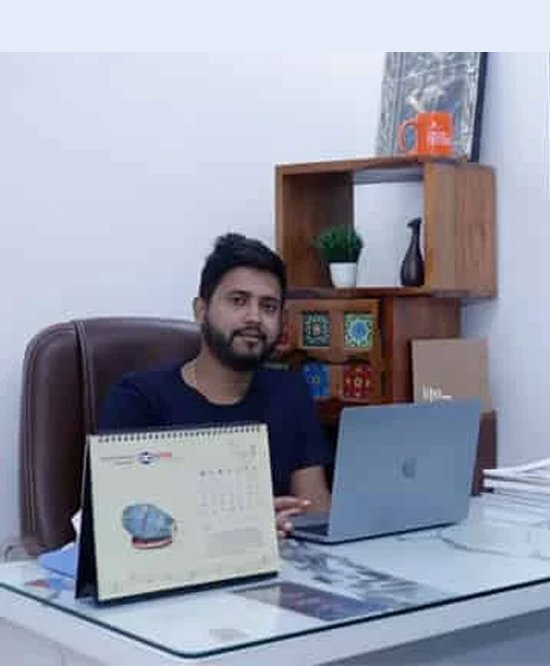
Director & Engineer
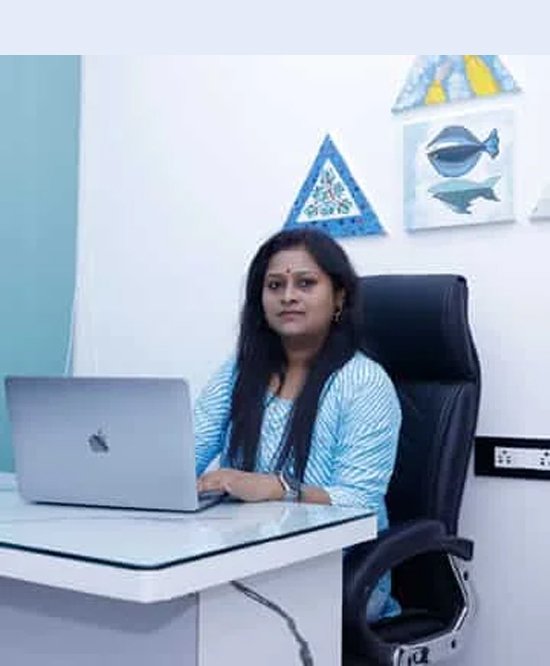
Communication Designer

IITian, Maths Olympiad Winner

Communication Trainer

Advance Math (UPSC)

Verbal, Non Verbal Reasoning (SSC)

Aptitude Math (SSC)

Technical Creative Faculty