NID Online Coaching: Enroll Now
If you're preparing for the NID Design Aptitude Test (DAT) and searching for the right guidance, you've probably realised there's a lot of conflicting advice floating around. Some people say you need to move to Delhi or Ahmedabad to get serious training. Others swear by self-study. The truth is somewhere in between — and for most students today, NID online coaching has become the practical middle ground: structured mentorship, real feedback on your sketches, and none of the cost or disruption of relocating.
This page breaks down what this format of preparation actually involves, how it's structured, and what to look for before you commit your time and money to a program.
What Is NID Online Coaching?
It's a live, instructor-led preparation program for the NID entrance exam, delivered entirely over video instead of in a physical classroom. It typically covers the same syllabus as offline classroom coaching — observation drawing, creative and imagination sketching, design thinking, material and product awareness, and general awareness — but classes happen through platforms like Zoom or a smart interactive board, with recordings available afterward.
The format exists because design aptitude, unlike most competitive exams, can't really be taught through PDFs alone. You need someone watching your sketches, correcting your proportions, and pushing your ideation in real time. That's exactly what a good online coaching program for NID entrance is built to replicate, minus the commute.
Why Students Are Choosing Online Coaching for NID Entrance
A few years ago, "online coaching for NID entrance" meant recorded video lectures and not much else. That's changed. Live interactive classes, screen-shared corrections, and one-on-one portfolio reviews over video call have closed most of the gap between online and offline learning. Here's what's driving the shift:
- Geography stops being a barrier. A student in Guwahati or Kochi can now access the same faculty as someone sitting in Delhi.
- Flexibility for working students and Class 12 aspirants. Recorded sessions mean you don't lose a class if school or college schedules clash.
- Lower cost than relocating. No hostel, no travel, no living expenses — just the course fee.
- Direct access to feedback. Camera angles and smart boards now allow faculty to correct a sketch almost as precisely as they would in person.
That said, online coaching for NID entrance only works if the program is genuinely interactive. A one-way lecture dump with no doubt sessions or individual feedback isn't the same thing, and it's worth checking this before you sign up for any online NID coaching batch.
What Do you get when you Join our NID Online coaching Program:
- LIVE CLASSES
- RECORDINGS
- PDF STUDY MATERIAL
- 24X7 SUPPORT
ENROLL NOW FOR NID ONLINE COACHING INSTITUTE:
| FEE |
|
Click To Know
|
Good NID Coaching Online Program Should Include
Not all programs marketed as "online coaching classes for NID" are built the same way. Before choosing one, check whether it offers:
- Live classes, not just pre-recorded video libraries — design thinking and sketching genuinely benefit from real-time correction.
- Recorded sessions for revision, so a missed class doesn't create a gap in your preparation.
- Structured study material covering both DAT Prelims (mental ability, general knowledge, drawing) and DAT Mains (studio test, portfolio-based evaluation).
- Regular mock tests, ideally in both PDF and computer-based test (CBT) format, matching the actual NID exam pattern.
- Small batch sizes, so instructors can actually look at individual work instead of teaching to a crowd.
- Doubt-clearing and parent-teacher sessions to track progress consistently, not just at the end of a term.
- Career counselling, since many aspirants are also weighing NID against NIFT, UCEED, or other design entrances.
If a program checks these boxes, it's genuinely comparable to offline classroom coaching — sometimes better, because recordings let you revisit tricky concepts as many times as you need.
OUR COURSE HIGHLIGHTS FOR NID ONLINE COACHING:
1. Live Classes
- Live classes get conducted by respective faculties on smart Interactive panel for a better experience
- Webinars and Workshops by Industry’s Experts
- Motivational Sessions
- Special Session before Entrance exam to discuss on Do’s and Don’ts
2. Recorded Lectures
- We Understand that students sometimes do not get to attend classes for various reason. That is Why we record all the live classes.
- Recorded Sessions are sent to students via email whenever they demand.
3. Weekly and Monthly Tests
4. Career Counselling before and after the admission
5. Small batches So faculties can focus on every individual
6. Regular Assignments to keep the pace on
7. 24x7 support via email, call and WhatsApp
SANYUKTA SINGH STUDIO STUDY MATERIAL FOR NID COMPRISES OF:
- Creative Topics PPT
- Numerical Ability
- Non-Verbal Reasoning
- Verbal Reasoning
- GK topics PPT
- English Language
- English Comprehension
- Visual and Spatial Ability
- Brain teaser
- Design Thinking and Problem Solving
- Observation and Design Sensitivity
Our NID Online Coaching Structure
Our online NID coaching programs run on a term or semester structure, spread across 6 to 12 months depending on when you start:
- Foundation phase — building observation skills, basic sketching, and understanding design vocabulary.
- Skill-building phase — creative and imagination drawing, design thinking exercises, material and product studies.
- Exam-focused phase — timed mock tests, previous years' paper practice, and Mains-specific studio test simulation.
- Portfolio and interview prep — for students who clear Prelims and move to DAT Mains, this stage focuses on building and presenting a design portfolio.
Students who start early (Class 11 or the beginning of Class 12) usually opt for the full-length program, while those preparing in their final months often join an intensive crash course that compresses the same syllabus into a shorter, high-intensity schedule.
Is Online NID Coaching Enough to Crack the Exam?
This is probably the most common question aspirants ask, and the honest answer is: yes, provided the coaching is interactive and you put in consistent daily practice. NID online coaching classes can deliver everything offline coaching offers — live correction, mock tests, portfolio feedback — but they can't replace the discipline of practising sketching every single day. The coaching gives you structure and feedback; the improvement still comes from repetition.
Design aptitude is a skill built over months, not crammed in the final weeks. So the real differentiator isn't online versus offline — it's whether you're getting consistent, personalised feedback on your work and whether you're showing up for practice regularly.
Choosing Between Online NID Coaching Classes
When comparing different Online NID Coaching Classes, it helps to look past the marketing and ask a few direct questions:
- Who is actually teaching the class — the founder/senior faculty, or a rotating set of junior instructors?
- How is portfolio feedback given — individually, or in a generic group format?
- Is the curriculum built specifically for NID DAT, or is it a generic design-entrance syllabus reused across NIFT, UCEED, and NID?
- What's the batch size, and how much one-on-one time does that realistically allow?
- Is there a verifiable track record of past student selections?
These questions matter more than the number of "live hours" advertised on a website, because sketching and design thinking improve through quality feedback, not just class duration.
FAQ
Yes, a complete program should prepare students for both stages — Prelims (mental ability, general knowledge, and drawing test) and Mains (studio test and portfolio-based evaluation), rather than focusing only on the first round.
Most programs are designed to take beginners through a foundation phase first, building observation and basic sketching skills before moving into exam-specific creative and design-thinking exercises. Prior experience helps but isn't mandatory.
Through live camera angles, smart interactive boards, and one-on-one video review sessions, instructors can correct proportions, composition, and design thinking in much the same way they would over a student's shoulder in a physical classroom.
Starting in Class 11 or early Class 12 gives the most room to build observational and creative skills gradually. Late starters can still cover the syllabus through an intensive, exam-focused crash course, though the pace is considerably faster.
For most students, yes — provided the batch is live and interactive rather than pre-recorded only. NID entrance coaching online works through the same core elements as a physical centre: live sketching correction, timed mock tests, and one-on-one portfolio review, just delivered over video instead of in person. The main things to verify before joining are batch size and how individual feedback is actually given, since those affect outcomes more than the delivery mode itself.
WHAT MAKES SANYUKTA STUDIO #1 IN NIFT/NID ENTRANCE
Highest Selection Ration of 92% in 2025-26 NIFT NID Entrance Exam. 100+ Selection in UCEED, 300+ Selection in NID and 1500+ Selection in NIFT

Expert Mentors
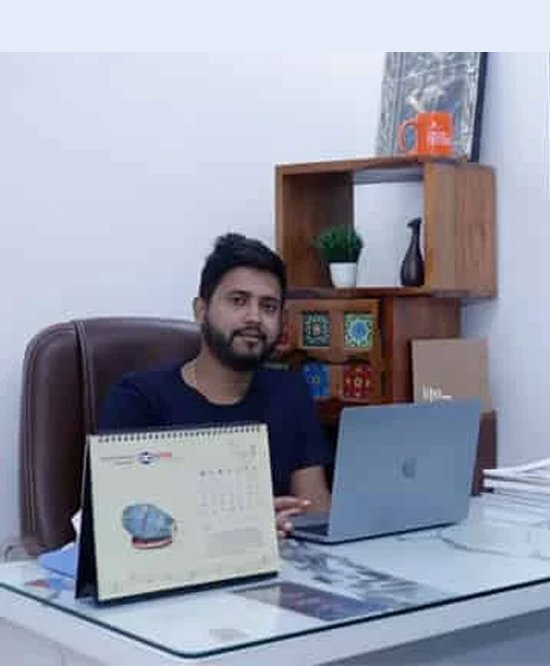
Director & Engineer

Communication Designer

IITian, Maths Olympiad Winner
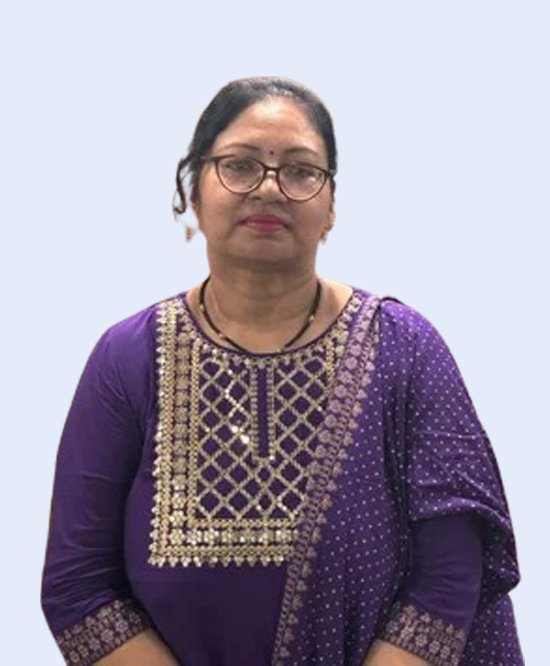
Communication Trainer

Advance Math (UPSC)

Verbal, Non Verbal Reasoning (SSC)

Aptitude Math (SSC)

Technical Creative Faculty